Death
Understand the Death tarot card meaning. Learn about transformation, endings, new beginnings, and why this card is rarely literal.
Death in your reading
The Card Imagery
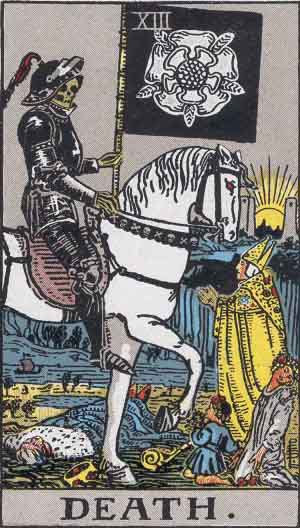
A skeleton in black armor rides a white horse, carrying a banner with a white rose. Before him, figures of all stations fall or kneel. The sun rises between two towers on the horizon, promising renewal.
Death Upright Meaning
Death represents endings, change, transformation, and transition. This card rarely indicates physical death; instead, it speaks to the end of a cycle, relationship, or way of being. What's dying makes way for new growth.
Upright Keywords:
Now read it for someone
Greta asks
“Just a general reading, please — it's my birthday.”
Death came up. What do you tell Greta?
Death Reversed Meaning
Reversed, Death indicates resistance to change, personal transformation delayed, or inner purging that hasn't completed. You may be holding onto something that needs to end.
Reversed Keywords:
Got the core?
A seeker with nothing obviously wrong in her life draws Death upright in a general one-card reading and asks if something terrible is coming. What is the grounded read?
What's your read?
Death in Specific Readings
The question changes the card. These guides go deep on Death in the readings people ask about most:
Reading Death in Practice
Death appears when continuation is no longer truthful. This card marks endings that are necessary for growth, even when they are uncomfortable or emotionally costly.
This is not a prediction of literal death in beginner curriculum context. It is structural transformation: one identity, path, or pattern must end so life can reorganize around what is now real.
Upright, Death supports closure, release, and brave transition. In shadow, it can show clinging, delayed grief, scorched-earth exits, or dramatizing change instead of integrating it.
The skeletal rider symbolizes inevitability and impartial process. The fallen figures show that status cannot stop transformation. The rising sun in the background reminds us that endings clear space for renewal.
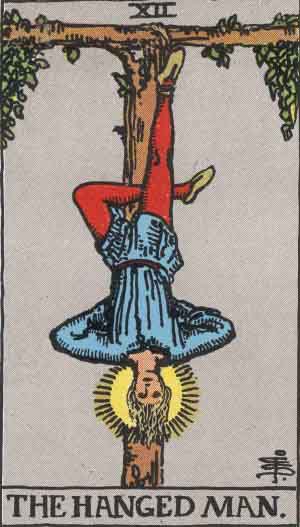
Contrast sharpens interpretation. Wheel of Fortune is cyclical change with variable timing; Death is a decisive threshold. The Hanged Man suspends for perspective; Death closes a chapter and does not return to the old form.
In context this becomes practical. Career: an outdated role or strategy must end. Relationship: a dynamic is complete, whether the bond ends or evolves radically. Personal growth: stop negotiating with what is already finished.
Three Things to Hold
Name the ending clearly
A strong Death reading identifies what is complete rather than speaking in vague transformation language.
Release before renewal
Do not rush to optimistic reframes. Honor what must be grieved or released first.
Irreversible shift
Death is not usually about minor tweaks. It marks threshold moments that change the structure of the path.
Common Mistake
Beginners often panic and read Death as literal doom, or soften it into "small changes." Both miss the lesson. Replace that with precision: what is ending, what attachment keeps it alive, and what transition step is now required.
Reading Questions
- • What chapter is clearly over, even if the querent resists it?
- • What are they trying to revive that has already completed?
- • What must be released before renewal can begin?
- • What concrete transition step marks clean closure now?
Example Reading
Question:
“I'm terrified of the changes happening in my life.”
Interpretation:
Death arrives not as a threat but as reassurance. Something is ending—but endings are the necessary precursors to beginnings. You cannot prevent this transformation, but you can choose to move through it with grace.
Related Content
Related Cards:
Try These Spreads:
Knowing Death isn't the same as reading it
The fastest way to make this card stick is to use it in a real reading. Our free tarot exercises put Death — and every other card — in front of you with a real seeker and a real question, then give you feedback on your interpretation.
Read Death for Greta →Learn Death properly
Take the interactive Death lesson: learn it upright and reversed, then read it for a real seeker and get instant feedback.
Start the Death lesson →