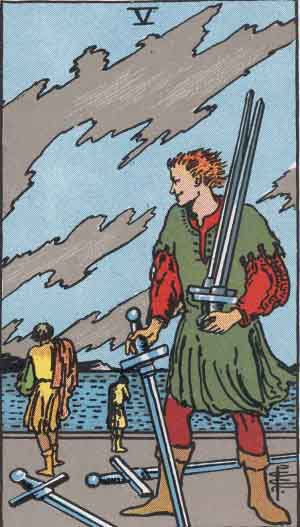
Five of Swords
Learn the Five of Swords tarot card meaning. Discover upright and reversed interpretations for this swords card in love, career, and personal growth readings.
The Card Imagery
A smirking figure holds three swords while two others walk away in defeat. Two swords lie on the ground. The sky is tumultuous.
Five of Swords Upright Meaning
The Five of Swords represents conflict, betrayal, and hollow victories. Winning at all costs leaves everyone diminished.
Upright Keywords:
Now read it for someone
Ben asks
“What do I need to know right now?”
The Five of Swords came up. What do you tell Ben?
Five of Swords Reversed Meaning
Reversed suggests resolution, reconciliation, or learning from past conflicts.
Reversed Keywords:
Example Reading
Question:
“Was this fight worth it?”
Interpretation:
The Five of Swords warns that some victories come at too high a price. Consider whether winning this battle is worth the relationship damage.
Related Content
Related Cards:
Try These Spreads:
Knowing Five of Swords isn't the same as reading it
The fastest way to make this card stick is to use it in a real reading. Our free tarot exercises put Five of Swords — and every other card — in front of you with a real seeker and a real question, then give you feedback on your interpretation.
Think you know Five of Swords cold? The free tarot card quiz tests all 78 cards in about four minutes.
Read the Five of Swords for Ben →The Practice Tarot classroom
Learn the Five of Swords the way readers do
80 lessons, about 6 minutes each, no deck needed. Every lesson goes the same way, so each card you learn makes the next one easier:
1The shift
What the Five of Swords changes in a reading, in one idea.
2Light & shadow
Its helpful side and its hard side, and how to tell them apart.
3The image
What to look at in the picture, so you can read it without a book.
4Read it for someone
A real question, your reading, and feedback on what you got.