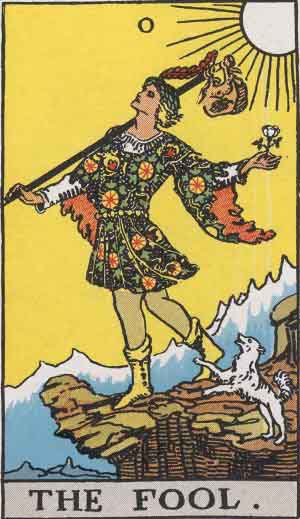
The Fool as Advice
You asked what to do, and The Fool answered. Here's the action it points to.
The short answer
Start now: take one real first step instead of waiting to feel ready.
- →Name the leap in one sentence first; a mood isn't a plan.
- ReversedYou're either frozen by fear or leaping blind. Fix that, then begin.
Tell me moreShow less
As advice, The Fool tells you to start. Take the step you've been circling, before you feel fully ready. But it comes with a built-in test: first, name exactly what the leap is. Advice you can't say in one sentence isn't a plan yet.
Now read it for someone
Hana asks
“Should I tell Mum I'm not coming for Christmas?”
The Fool is the advice card. What do you tell Hana?
The Fool Upright As Advice
Upright in the advice position, The Fool says begin. Not "research more," not "wait for a clearer sign." Begin. It's the card of the first real step: sending the application, booking the class, having the conversation. Its whole argument is simple. You don't need the full route to take the first step, and waiting for certainty is how beginnings quietly die.
Signs to look for
- You can say what you would start this week in one sentence.
- The first step is small and concrete: an application, a booking, a conversation.
- Ignoring it looks like one more round of research before you commit.
Tell me moreShow less
The skill is in what the card asks of you before you move. Make the leap concrete: what exactly would you be starting, this week? People who can answer that get the Fool's green light. People who answer with a mood ("something different, somewhere else") are holding a wish, not a plan. They should slow down if the Seven of Cups turns up nearby.
Notice the little dog on the card: instinct trotting alongside, nipping at the traveler's heels. The Fool's advice is to leap with your eyes on where you're going, not shut. To see how readers apply this to real situations, the interactive Fool lesson walks you through calling a leap brave or reckless.
Read it yourself
uprightLena has circled a pottery course for a year and asks what to do about it. She draws The Fool upright as advice.
What's your read?
The Fool Reversed As Advice
Reversed as advice, the card is trickier, because it can mean two opposite things. The way to tell them apart is your own recent behavior, not another card. If you've been planning the same move for months and haven't taken one real step, the reversed Fool reads as frozen at the edge. The advice: stop polishing the plan and look at the fear underneath it, because that's the real obstacle.
Signs to look for
- Months of planning the same move, no real step taken.
- About to quit, book, or send something you cannot undo, on impulse.
- You can only describe the leap as a mood: "something different, somewhere else."
Tell me moreShow less
If instead you're about to torch everything on impulse (quit with no savings, book the one-way ticket, send the message you can't unsend), reversed reads as the other failure: leaping blind. The advice flips to "look down once." Not forever. Once. Check the one risk you've been refusing to see.
Either way, reversed never means "never begin." It means the beginning is being handled badly, stalled by fear or stripped of thought. The fix depends on which one you're doing. A one-card check-in each morning for a week is a good way to watch which pattern you're actually in.
Read it yourself
reversedRob plans to quit tomorrow with no savings and no next step, "because the card said leap." He draws The Fool reversed as advice.
What's your read?
How to Read It More Precisely
The Fool as advice answers "should I start?" It says nothing about how the thing ends. If you need the outcome read too, use a spread with its own outcome position instead of stretching one card past its job.
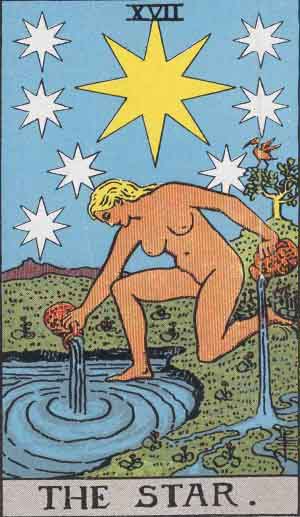
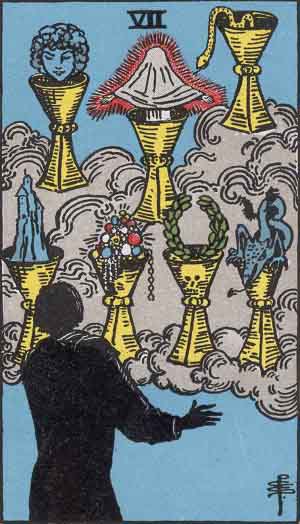
Neighbors change the instruction: beside The Star, the leap is backed and the advice is confident; beside the Seven of Cups, it becomes "ground the daydream in a plan first." Same card, different homework.
Misread to avoid: "be spontaneous" is not "be destructive." The Fool travels light. It says drop old baggage on the way in, not tear down what you've built to force a fresh start.
Waiting for certainty is how beginnings quietly die.
The lesson · try it right here
Read The Fool yourself, with feedback
Pages tell you tendencies. A reading asks you to weigh them for one person, in one situation. That's the skill, and you can learn it.
The Leap
The usual misread: “He's a fool — he's about to walk off a cliff and mess it all up.”
Common Questions
Does The Fool as advice mean I should quit my job?
Only if quitting is a step toward something you can name. The Fool backs movement toward a beginning, not escape from a middle. A quick honesty test: finish the sentence "I'm leaving so that I can ___." If the blank is specific, the card supports it. If the blank is "not be here," you're reading escape as adventure. That's the most common way this card gets misused.
What if I don't know what leap the card means?
Then the card caught you mid-fog, and the fix is smaller than it sounds. List what you'd start tomorrow if fear weren't a factor. Usually one item on that list is the leap, and you knew it while writing it. Then test the read on stories that aren't yours: run a few practice readings with the Fool in the advice spot and watch how the meaning shifts with the question.
Try reading The Fool yourself
Meanings only stick when you use them. Our free tarot exercises give you a real seeker and a real question — you read the cards, and get feedback on your interpretation. New to this? Start with how to practice tarot, the 15-minute daily loop.
Read the Fool for Hana →