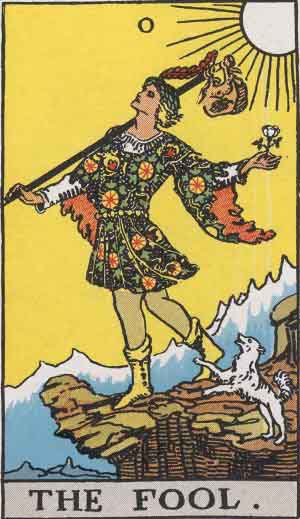
The Fool Yes or No? Leans Yes
You asked a yes/no question and drew The Fool. Short answer first, reasoning right after.
The short answer
- Upright
Leans yes
Leans yes: strongest when the question is about starting something
- Reversed
No
Reversed is a soft no with an expiry date: not yet, not like this.
…and it can flip. Your question decides.
You asked "should I start this?", "should I try it?", or "should I say yes to the invite?"
You asked "will it work out?", "will we end up together?", or "will it make money?"
Why? See the reasoningShow less
The Fool is the deck's beginning card: number zero, the step before the story. So it answers "should I begin?" with a natural yes. It answers "how will it end?" barely at all, because it only ever sees the first step. Upright, on a start-shaped question, take the yes. Reversed, or on an outcome-shaped question, read it as "not yet" or "wrong question" instead.
The Fool leans yes. It's a clear yes if your question is about starting something, trying something, or accepting an invitation. It's a weak witness on how things end. And reversed, it shifts to "not yet, not like this." The reasoning below lets you work all of that out yourself.
Now read it for someone
Callum asks
“Is she the one?”
One card for a yes-or-no question, and it is the Fool. What do you tell Callum?
The Fool Upright: Reading the Yes
Upright, count it as yes for anything with a start in it: apply, ask, enroll, launch, go on the date, take the trip. The card's number is zero. It sits before the whole sequence, which is why it reads as permission to open a new sequence of your own. The yes carries the Fool's one condition: eyes open. Yes to beginning is not yes to skipping the look before you leap. The cliff on the card is drawn there on purpose.
Signs to look for
- The question has a start in it: apply, ask, enroll, launch, go.
- You can name the one risk you are stepping past.
- The question is about the next step you control, not the ending.
Tell me moreShow less
Where the yes weakens is outcome questions: "will we end up together," "will the business make money." The Fool witnessed the first step and nothing after, so treat its answer there as "too early to call" rather than a shy yes. Half of yes-or-no skill is matching the card to the shape of the question, a habit the yes/no spread guide builds. It's why rewording a question usually beats pulling extra cards.
Read it yourself
uprightTheo asks "should I enroll in the coding bootcamp?" and draws The Fool upright.
What's your read?
The Fool Reversed: When the Answer Shifts
Reversed, the answer shifts to "not yet, not like this." That's more useful than a flat no, because it tells you what would change the answer. If the block is fear (you've been hovering over the same decision for months), the no expires the moment you face what's stopping you. If the block is recklessness (you're about to leap with no plan and no look down), the no is protective and stands until a plan exists.
Signs to look for
- You have hovered over the same decision for months.
- No plan, no look down, just momentum toward the leap.
- You drew the card hoping for permission, not an answer.
Tell me moreShow less
So the reversed Fool's no has conditions, and you're one of them. Ask again after you've either faced the fear or built the plan, and the card often upgrades. What reversed never means is "never begin." Reversals mark a blocked or distorted meaning, not an opposite one. That single idea fixes most wrong reversed-Fool answers. It turns "the deck said no" into a question you can actually work with: no to what, exactly, and until when?
Read it yourself
reversedMara asks "should I launch my shop next month?" and draws The Fool reversed. She has no pricing, no stock plan, just momentum.
What's your read?
How to Read It More Precisely
Question shape decides everything: "should I start X?" gets the strong yes; "will X work out?" gets a shrug. If you notice you asked the second kind, the fix is rewording, not redrawing.
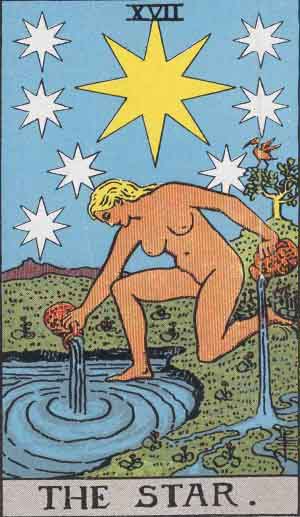
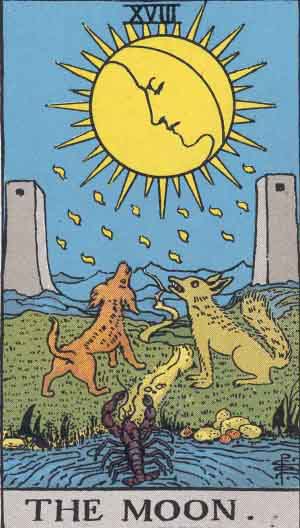
Neighbors move the lean: The Star or an Ace beside the Fool firms the yes; The Moon drags it toward "not while you can't see the ground, so no for now." The Fool's core meaning stays fixed; the confidence moves.
Beware the yes you wanted: if you drew this card hoping for permission, test yourself on a story that isn't yours. The interactive Fool lesson includes one where the right call is "don't jump yet."
The reversed Fool's no has conditions, and you're one of them.
Your turn: a practice read
One more seeker, one card. This time you make the call.
A seeker has been writing songs alone for two years. A friend who runs an open mic night has offered her a slot next month. She wants it, and she keeps saying she will sign up once the songs are more ready. Tonight she pulls one card.
“Should I take the open mic slot?”
The card on the table: The Fool. What's your read?
One rep down, and the options were written for you. In the full Fool lesson you make the call in your own words, then get feedback on what you saw and what you skipped.
The lesson · try it right here
Read The Fool yourself, with feedback
Pages tell you tendencies. A reading asks you to weigh them for one person, in one situation. That's the skill, and you can learn it.
The Leap
The usual misread: “He's a fool — he's about to walk off a cliff and mess it all up.”
Common Questions
Is The Fool yes or no for love questions?
For "should I give this person a chance?" the answer is yes. For "is this my forever person?" the Fool describes beginnings, and forever is an outcome, so it is the wrong card for that question. If a love question is really an outcome question in disguise, reword it around the next step you control, and the Fool can answer again.
Does The Fool reversed mean a hard no?
Rarely. Read it as "no under current conditions." The leap is stalled by fear or stripped of planning, and either one is fixable by you. A hard no would need heavier company around the card. The practical move: name the block, handle it, and ask again in a week rather than shopping for a better card today. Try that pattern on neutral stories in practice readings first.
Is the Fool reversed a yes or no?
Mostly no, but a soft no with an expiry date. Reversed, the Fool answers "not yet, not like this." The leap you asked about is blocked by fear or short on a plan, and the card wants that fixed before you go. It is not warning you off the beginning itself. Handle the block, bring the question back, and the answer often upgrades to an upright yes.
Try reading The Fool yourself
Meanings only stick when you use them. Our free tarot exercises give you a real seeker and a real question — you read the cards, and get feedback on your interpretation. New to this? Start with how to practice tarot, the 15-minute daily loop.
Read the Fool for Callum →