The 5 Most Misread Tarot Cards (From 5,000+ Practice Sessions)
After looking across thousands of practice readings, five cards trip people up more than any others. Here's the usual misreading, a more accurate take, and how to catch yourself.
Practice reading in contextThe pattern behind all five is the same: each card has a loud surface image that invites a snap verdict, and a quieter second layer that's easy to skip. The fix isn't a new keyword to memorise — it's slowing down long enough to ask what the card is doing in this position, for this question.
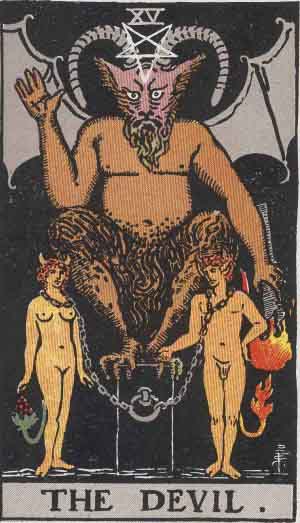
1. The Devil
23% read it skillfully
Common misreading: “Something evil is happening” — readers jump to a sinister outside force.
A more accurate take: Ask whether the seeker feels powerless, trapped, or bound — while recognising they still hold a choice. The Devil is usually about the chains we cling to, not an external evil.
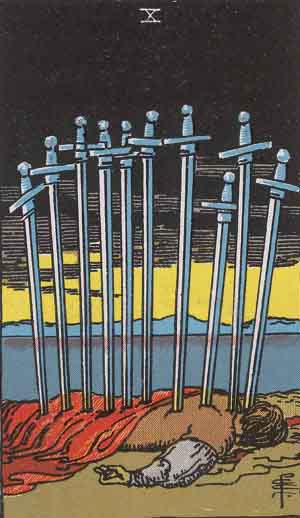
2. Ten of Swords
31% read it skillfully
Common misreading: “Everything is terrible” — readers over-index on the dramatic image.
The missing piece: Notice the dawn breaking in the background. This card often marks the end of a painful cycle — rock bottom, and the turn that follows. It closes something; it doesn’t erase hope.
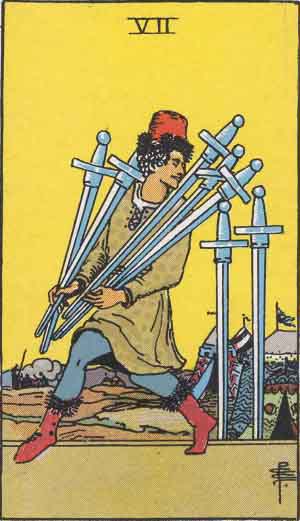
3. Seven of Swords
27% read it skillfully
Common misreading: “Someone is definitely lying” — readers assume deceit or malice.
The nuance: It may point to strategy, partial truth, or discretion — someone holding cards back, or acting tactically. Sometimes it’s the seeker being asked to be more transparent, not a villain in the wings.
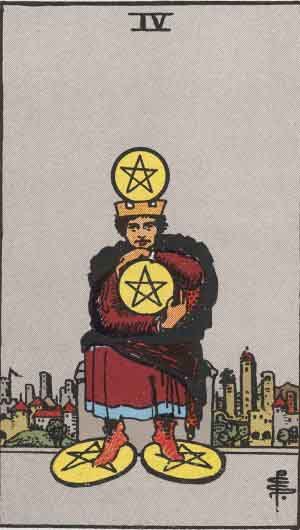
4. Four of Pentacles
35% read it skillfully
Common misreading: “You’re being greedy” — readers collapse it into a judgment.
The complexity: Security or stagnation? It can read as healthy boundaries and prudence, or as a grip so tight nothing new gets in. Context decides whether it’s protective or restrictive.

5. The Star
42% read it skillfully
Common misreading: “Everything will be perfect” — readers promise a happy outcome.
The subtle teaching: Hope and healing, not a guaranteed result. The Star offers replenishment and faith after hardship — renewed direction, not a prediction that all will be well.
Watch context flip a card
Here's the difference context makes. Say a seeker asks, “Why do I keep staying in a job that drains me?” and the Devil lands in the Present position of a Past–Present–Future spread.
The snap read
“The Devil — this job is toxic and it's trapping you.” Dramatic, and it hands the seeker a verdict with no door out.
The in-context read
“The Devil in the Present, answering why you stay, may point to a comfort you're bound to — the steady paycheck, the fear of the unknown. The chain has a latch. What would it cost to reach for it?”
Same card, same seeker — but reading it for the question and the position turns a dead-end into a doorway. That's the whole skill these five cards demand.
Why these cards trip readers up
❌ Reading the picture instead of the position.
✅ Instead: Let the position and question steer the meaning before the imagery does.
❌ Fear-based interpreting — “bad” cards read as worse, “good” cards over-promised.
✅ Instead: Assume most cards sit on a spectrum and name where this one lands.
❌ All-or-nothing verdicts that leave the seeker no agency.
✅ Instead: End on a choice or next step, not a sentence.
Now you try
The best drill for these cards is reading them among others, where context does its work. Draw three cards for a real seeker and read them as a story — then get instant feedback on your take.
Try the Three-Card Daily now
Your seeker
Elena. I found old love letters in my fiancé's jacket from his 'best friend' who's also my maid of honor. Six weeks before my wedding, I'm questioning everything I thought I knew.
“Should I have a difficult conversation with my friend about something that's been bothering me?”
1 of 3
Situation
What's happening now? The current energy, circumstances, or challenge you're facing.
Feedback on your reading: strengths, blind spots, what to sharpen · free · no signup
Prefer one big text box?
Improving your accuracy
The fastest way to read these cards better is deliberate practice in context. Work through real scenarios — career crossroads, relationship questions, personal growth — so you watch cards shift meaning as the situation changes. Then use the practice tool to get feedback on your interpretations and spot your own patterns.