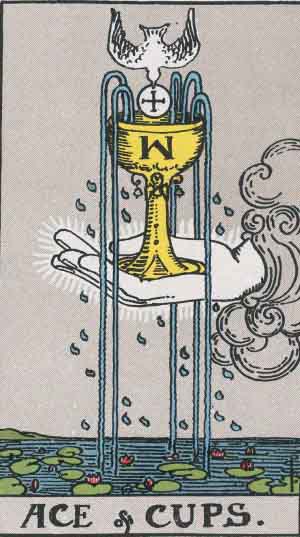
Ace of Cups Yes or No? Yes
You asked a yes/no question and drew Ace of Cups. Short answer first, reasoning right after.
The short answer
- Upright
Yes
Yes for feelings and beginnings; the ending is not included
- Reversed
Leans no
Reversed reads not yet: the feeling or opening exists but is blocked.
…and it can flip. Your question decides.
You asked "does someone have feelings for me?", "is this real?", or "will my heart heal?"
You asked "will this become a lasting relationship?" or "is the happy ending certain?"
Why? See the reasoningShow less
The Ace of Cups is a full cup held out: feeling with real substance, at its start. Questions about feelings, connection, healing, and fresh starts get a warm yes, because an opening genuinely exists. Questions about final outcomes, like commitment or marriage, outrun the card: it witnesses the first page, not the whole story. Take the yes, and notice that it covers the start you asked from.
The Ace of Cups leans yes, and warmly. For questions about feelings, new connections, healing, and fresh starts, it is one of the friendliest answers in the deck. The catch is scope: it says yes to something real beginning, not to the finished ending you may be picturing.
Now read it for someone
Priya asks
“Will he come back?”
One card for a yes-or-no question, and it is the Ace of Cups. What do you tell Priya?
Ace of Cups Upright: Reading the Yes
Upright in a yes or no reading, treat the Ace of Cups as yes to the beginning. Does someone have feelings for me? Yes, something real has opened. Is this connection worth pursuing? Yes. Will my heart recover? Yes, it is already starting. The card is a full cup being held out, and for feelings questions that is about as warm as the deck gets.
Signs to look for
- Your question is about feelings, a beginning, or healing.
- Something real has already started: the door is open now.
- Behavior, not only words, shows the feeling being acted on.
Tell me moreShow less
Now check the scope of your question. "Will we end up together forever" asks the Ace to see a whole story when it only witnesses the first page. The yes covers the opening: the feeling is real, the door is open, the start is available. Everything past the start is built by people, not promised by cards.
So before accepting the yes, rerun the question: what exactly is opening here? Asking it that way turns a verdict into a reading. The interactive Ace of Cups lesson trains that reframe, and a yes or no spread works better when the question is built first.
Read it yourself
uprightA seeker asks "does my close friend have feelings for me?" and draws the Ace of Cups upright.
What's your read?
Ace of Cups Reversed: When the Answer Shifts
Reversed, the Ace of Cups reads as not yet rather than no. The feeling or the opening your question asks about usually exists, but it is blocked: emotion someone cannot express, healing that has stalled, an offer stuck behind fear or bad timing. Asked "will this move forward soon," the reversed Ace leans no on the soon and stays warmer on the eventually.
Signs to look for
- Your question has "soon" in it; the timing is what fails.
- The feeling exists but sits behind fear, bad timing, or old history.
- Healing has stalled: the capacity is there, one specific block in the way.
Tell me moreShow less
For questions about yourself, like "will I get over this" or "can I open up again," reversed is a conditional yes: the capacity is there, and something specific is in the way. Finding the block is the real reading. Is the feeling refused at the door, or poured out so fast that nothing stays with you? Those need opposite fixes, and a daily practice reading makes the difference quick to spot.
Read it yourself
reversedA seeker asks "will he open up to me about what he feels soon?" and draws the Ace of Cups reversed.
What's your read?
How to Read It More Precisely
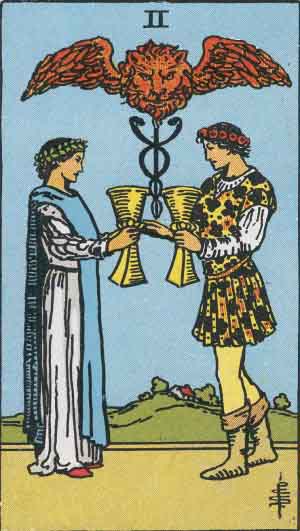
Neighbors set the scope of the yes. The Two of Cups beside the Ace extends it to mutual: both people in. Without that support, keep the yes at "real feeling exists" and let behavior confirm the rest.
Question shape matters more than people expect. "Should I open up to them?" gets this card's strongest yes, because opening is the card's whole subject. "Will they open up to me?" borrows someone else's choices, and no card controls those.
On timing, Aces sit at the start of a cycle, so traditional readers call them fast: days to weeks, not seasons. Hold that loosely. Timing in tarot is the least reliable thing cards do. The safer read: the opening is available now.
The Ace of Cups says yes to the beginning. The ending is still yours to build.
Your turn: a practice read
You have seen the opening-versus-outcome call. Make it on a live question.
A seeker reconnected with her estranged sister last month. The replies have been warm, and her sister suggested meeting up. She pulls one card on the question underneath it all, and the Ace of Cups arrives upright.
“Will we get back the closeness we used to have?”
The card on the table: Ace of Cups. What's your read?
One rep down, with the options written for you. The full Ace of Cups lesson makes you find the read yourself: three seekers, clarifier flips, and feedback on what you caught.
The lesson · try it right here
Read Ace of Cups yourself, with feedback
Pages tell you tendencies. A reading asks you to weigh them for one person, in one situation. That's the skill, and you can learn it.
A Heart Opening
The usual misread: “It's the Ace of Cups — so love's on the way and it all works out.”
Common Questions
Is the Ace of Cups always a yes?
For feelings, beginnings, and healing questions, it is as close to a plain yes as tarot offers. It stops covering you at outcome questions: commitment, marriage, whether a story ends well. There the honest answer is "the start is real, the ending is unwritten." If your yes felt too easy, check which kind of question you asked before you build plans on it.
What timing does the Ace of Cups suggest?
Aces mark the first spark of their suit, so traditional timing reads them as soon: the opening is either present already or close. Some readers tie cups to summer, or to months. Treat all of that as folklore with a grain of use. Cards read situations far better than calendars. The dependable version is this: the feeling has already started, so the timing question is really about response, and that part is yours.
Is the Ace of Cups reversed a yes or no?
Read it as "not yet." The feeling or opening usually exists but is blocked: unexpressed emotion, stalled healing, an offer stuck behind fear. For questions with "soon" in them, lean no. For questions about whether something is possible, lean yes with work attached. The useful follow-up is not a second draw. It is asking what, specifically, is blocking the cup.
Try reading Ace of Cups yourself
Meanings only stick when you use them. Our free tarot exercises give you a real seeker and a real question — you read the cards, and get feedback on your interpretation. New to this? Start with how to practice tarot, the 15-minute daily loop.
Read the Ace of Cups for Priya →