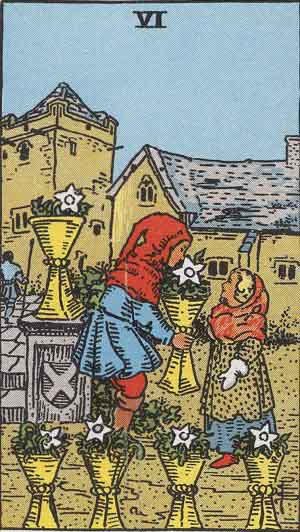
Six of Cups Yes or No? Leans Yes
You asked a yes/no question and drew Six of Cups. Short answer first, reasoning right after.
The short answer
- Upright
Leans yes
Leans yes, warmest for reunion and reconnection
- Reversed
Leans no
Reversed leans no, hardest for going back: the past's grip is the problem.
…and it can flip. Your question decides.
You asked "will we reconnect?", "will the reunion go well?", or "do they remember me fondly?"
You asked "should I go back?" or "is returning the right move for me?"
Why? See the reasoningShow less
The Six of Cups is old warmth returning: shared history, kindness freely given, familiar doors reopening. Questions that run along that grain, like reunions, apologies, and reconnecting, get a gentle yes. Questions that ask permission to move backward get less than people want: the card confirms the pull of the past is real, and stays neutral on whether going back serves you. Asked whether things will be exactly as they were, it leans no. The past returns changed.
The Six of Cups leans yes. It is one of the deck's warmer cards for questions about reconnecting, making peace, or an old door reopening. One exception matters: asked "should I go back?", it stops short of a verdict. It shows the pull of the past and leaves the judging to you.
Now read it for someone
Elif asks
“Should I text him first?”
One card for a yes-or-no question, and it is the Six of Cups. What do you tell Elif?
Six of Cups Upright: Reading the Yes
Upright in a yes or no reading, treat the Six of Cups as a gentle yes. Will the reunion go well? Yes, lean in. Will my apology land? Yes, it has soft ground to land on. Do they remember me fondly? It leans yes there too. The card's whole picture is warmth passed freely between people with history, and questions that run along that grain get its blessing.
Signs to look for
- The question is about reconnecting, apologizing, or an old door reopening.
- There is real shared history, and most of it was warm.
- Asked "should I go back?", expect a pull, not permission.
Tell me moreShow less
The exception is the go-back question. "Should I return to my ex, my old job, my hometown?" There the card goes quiet on purpose. It shows the pull, not the permission. It confirms the draw toward familiar ground is real and warm. Whether returning would feed you or shrink you is a second question, and the honest answer needs more than one card.
A third shape, "will it be just like before?", leans no. The past comes back changed, because everyone in it changed. Reunions succeed as sequels, not reruns. Build the question well before you shuffle, and a yes or no spread gets far more honest.
Read it yourself
uprightA seeker fell out with her sister last spring and plans to apologize at a family birthday. She asks "will my apology go over well?" and draws the Six of Cups upright.
What's your read?
Six of Cups Reversed: When the Answer Shifts
Reversed in a yes or no reading, the Six of Cups leans no for most questions, and hardest for go-back questions. Will we get back together? Leans no. Should I return? Leans no, for now. Reversed marks the past's grip as the live problem: clinging, an idealized memory, a comparison the present keeps losing. Answers built inside that grip serve the memory, not you.
Signs to look for
- You are asking permission to go back to an ex, job, or hometown.
- The present keeps losing a comparison with an edited memory.
- Exception: questions about letting go can pull a quiet yes.
Tell me moreShow less
The clean exception: questions about moving on. "Am I ready to let this go?" or "will I get past this?" can flip reversed toward a quiet yes, because one of its honest meanings is release, the old attachment finally loosening. Which reading fits is usually visible in your own week: lighter is release, looping is clinging. Reversals reward that slow look, and the interactive Six of Cups lesson plus a few practice draws will make the call feel routine.
Read it yourself
reversedA seeker asks "should I get back together with my ex?" and pulls the Six of Cups reversed.
What's your read?
How to Read It More Precisely

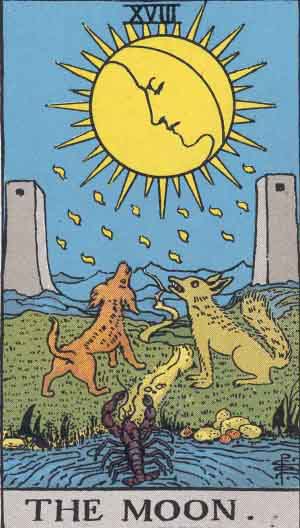
Neighbors sharpen the lean. Beside the Sun, a reunion question is about as close to a plain yes as this deck gets. Beside the Moon, the warmth is real but the picture is incomplete: ask what you are not being shown.
The Six carries no calendar. "Will they come back?" at best gets "the warmth is live and return is in the air." Dates, weeks, and deadlines belong to a timing spread, not a yes or no.
Reunions succeed as sequels, not reruns.
Your turn: a practice read
You have the leans. Now call a live question.
A seeker's childhood best friend found her online after ten years of silence and wants to pick the friendship back up. She is happy about it, and a little wary, and pulls one card.
“Will reconnecting with my old best friend go well?”
The card on the table: Six of Cups. What's your read?
That was one rep with the choices done for you. The full lesson makes you do the reading in your own words, then you see what you caught and what you missed.
The lesson · try it right here
Read Six of Cups yourself, with feedback
Pages tell you tendencies. A reading asks you to weigh them for one person, in one situation. That's the skill, and you can learn it.
Back to the Familiar
The usual misread: “It's the Six of Cups — so it's sweet nostalgia, happy childhood, the good old days.”
Common Questions
Is the Six of Cups a yes or no for love questions?
Leans yes, with its usual shape. Will they reach out, will the date feel warm, will making up work: yes territory. Should I get back with my ex: neutral on purpose. The card confirms the warmth is real and shared history is pulling, and it declines to grade whether going back is good for you. That grading is a fuller reading, with present-day facts on the table.
Why did I draw a past card for a question about my future?
Because the future it sees has roots. The Six of Cups in a future-facing question usually means something familiar is returning ahead: a person, a place, a skill, an old sweetness circling back into your life. It can also mean your next chapter is built from material you already own. Either way the card is not stuck behind you. It points at what comes back around.
Is the Six of Cups reversed a yes or no?
Leans no for most questions, and hardest for going back: rekindling an ex, returning to an old job, moving home. Reversed marks the past's grip as the problem, so choices made inside that grip read poorly. The one flip: questions about release. "Am I ready to move on?" can pull a quiet yes, because letting go is this reversal's healthiest meaning. If the reversal disappointed you, check which side you were hoping for.
Try reading Six of Cups yourself
Meanings only stick when you use them. Our free tarot exercises give you a real seeker and a real question — you read the cards, and get feedback on your interpretation. New to this? Start with how to practice tarot, the 15-minute daily loop.
Read the Six of Cups for Elif →